
What media companies can learn from Facebook's unbelievable mobile growth
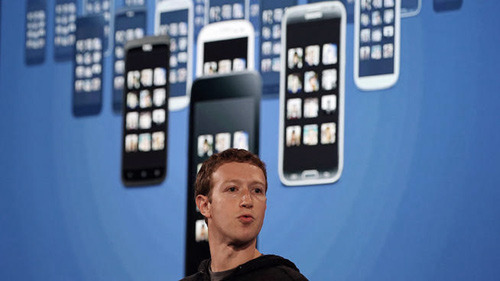
Just last summer, Mark Zuckerberg was hammered with questions about mobile monetization – which was zero – and he promised to improve Facebook’s crappy mobile app. Then the company’s IPO fell flat. Fast forward to this summer, and Facebook’s new mobile numbers should make your head spin:
- 41% of total ad revenue is mobile, up 30% from last quarter. - 70% of monthly active users visit via mobile, up 51% year-over-year. - 19% of monthly active users are mobile ONLY (219 million of ‘em). - Oh, and Facebook has more than 1 million active advertisers.
The first number alone is astounding (that comes out to $656 million), and Facebook’s stock is skyrocketing. How did Facebook engineer such a rapid mobile turnaround, and what can media companies learn from it?
For starters, I’ll quote author David Burkus: “Innovation isn’t an idea problem, it’s a recognition problem.“ At first, you have to believe. Zuckerberg recognized that his company’s future hinged on mobile, and he followed it up with aggressive action. Here’s what he did, according to stories in Fortune and Fast Company as well as posts on Facebook’s engineering page:
- Announced to staff that Facebook’s top priority is becoming a mobile company. - Reorganized the company to embed mobile engineers in all product teams, making every product head responsible for mobile. - Turned off Facebook.com internally for a week, forcing staff to use mobile apps. - Abandoned Facebook’s hybrid apps and rebuilt them from scratch as native apps (a risky decision with an IPO around the corner.) - Created a recruiting program to identify mobile engineering talent, and hired aggressively across the company. - Offered mobile-skills training programs for hundreds of engineers. - Required new mobile releases every 4-8 weeks. - Encouraged employees to trade in iPhones for Android devices to better represent what the majority of Facebook mobile users have. - Acquired Instagram for $1 billion (another risky decision before an IPO). - Repeatedly asks employees, “What’s that look like on mobile?”
Facebook soon went from “mobile first” to what Zuckerberg now calls “mobile best,” and the results speak for themselves. Mobile is not an addition, but a transformation driven by action in the face of risk and uncertainty. “You have to change the tasks at the very core” supported by resources to change an organization’s culture, explains David Skok, who co-authored a report with Harvard’s Clayton Christensen on media disruption.
Facebook is more than just a mobile case study; it should be a wake-up call for media companies and news organizations. Facebook’s mobile presence is greater than every media company’s mobile footprint combined. Zuckerberg says his goal is to make it the best personalized newspaper on the planet, and with 819 million mobile monthly active users and 1 million advertisers, he’s off to a good start.