
Skills that rise above AI automation
Lessons from local TV news about who survives AI
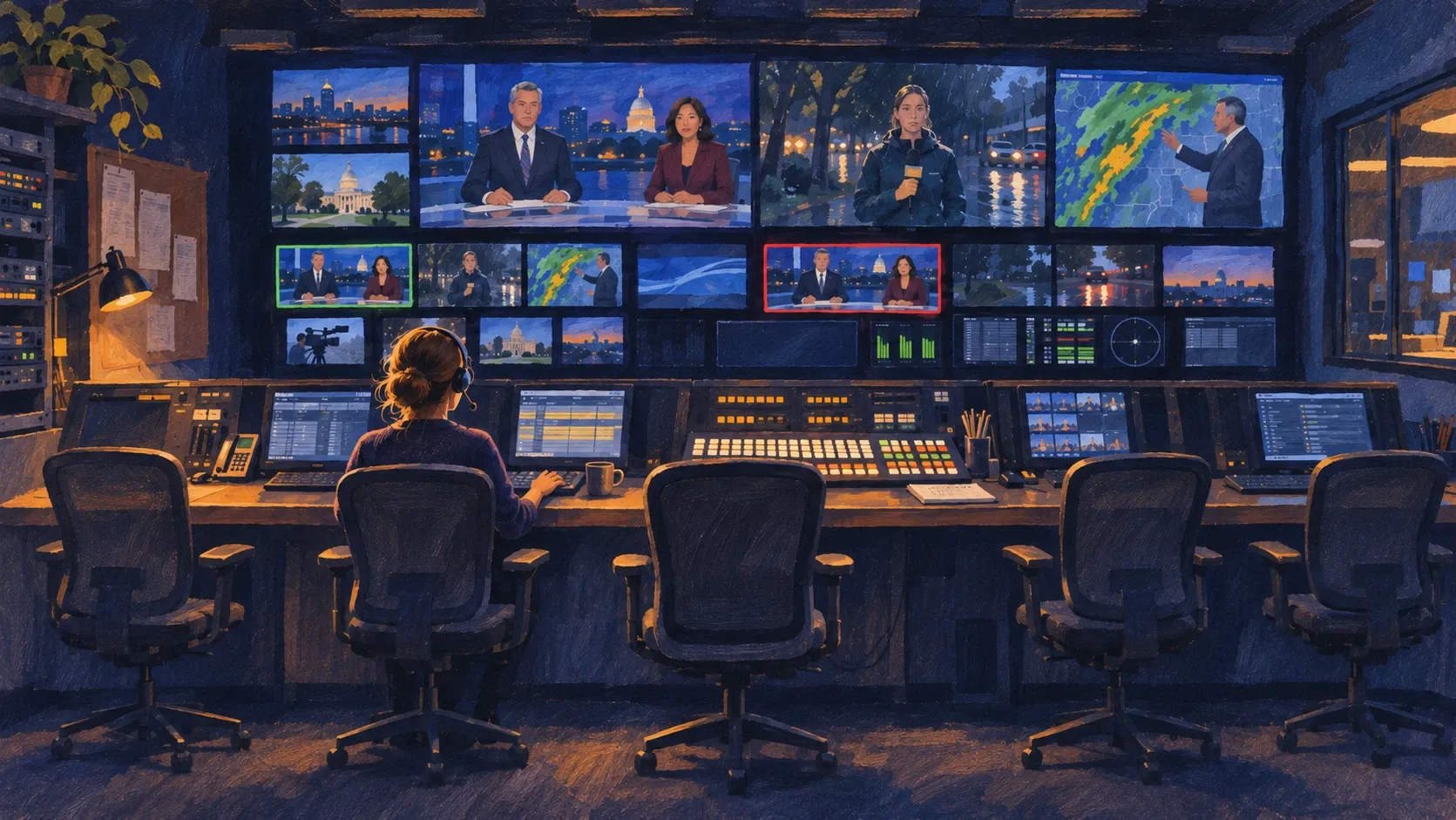
Before venturing into the world of technology, I worked in local TV news many years ago. When I started in Sacramento, it took at least a dozen production people to put a live newscast on the air. Today, it only takes a team of two or three working behind the scenes.
As I look back, this transformation has several lessons for global security teams and other fields facing the reality of AI. Over the course of 25 years, new vendor tools collapsed tasks, then roles, leaving only a few survivors running the show.
It began in the studio itself, replacing the camera operators with a single robotic camera operator in the late 1990s. Then it marched through tape playback operators, floor directors, teleprompter operators, graphics operators, technical directors, audio engineers and master control operators — and that robotic camera operator, too.
Over all that time at most stations, tasks rolled up to directors and producers. In our analogy with global security, directors are like operators, producers like analysts. Directors handle cameras, audio, video and effects. Producers build the rundown and write and edit the content. They’re joined by anchors in the studio and reporters in the field, who now double as photographers, too. This year, a few stations are even experimenting with dropping directors.
Nothing tells the automation story better than the image of a sole producer sitting alone in a sprawling control room built for a half-dozen people. In the studio down the hall, anchors talk into robotic camera lenses while running their own teleprompters with a foot pedal. The march of automation is painful and in a way a bit ridiculous, but it’s nearly always unstoppable.
So what are the skills that survived?
-
Adept at orchestration: Producers and directors are masters of multitasking, orchestrating automation and jumping in when news breaks or something goes haywire. By extension, they’re jacks of all trades, and they’re comfortable wearing all the hats. They’re adept at navigating technology and all its quirks, because they live and die by it.
-
Willingness to experiment: Everyone likes to think they’re open to new technology, but here’s the catch: nearly all these new tools decreased quality when they were first introduced. It’s easy to fight new automation when it undermines quality, but in doing so, you’re less likely to be selected to orchestrate it. Security teams face the same choice with AI tools that aren’t quite ready.
-
Storytellers with taste: Taste is more than just style: it’s knowing when something is good and how to get it there. A “good show” is not just a lack of errors, it’s compelling television that shows up in the ratings. Newscasts can feel automatic – the same old stories with the same old lines – until that one story, that one shot, makes you feel something. The best producers and directors find those moments, engendering human emotion that automation alone fails to capture. For an analyst, it’s the briefing that makes an executive care.
-
Good judgment: “News judgment” can be hard to define, but it’s a combination of knowing what matters to your audience, prioritizing information and getting the facts right. Good producers can sniff out both a good lead story and when something is “too good to be true.” They know when to take control from the automation, and they own the quality of the final product.
-
Clear communication: Orchestration requires collaboration, which is fueled by strong communication skills and the ability to hold it together under pressure. People want to work with someone who makes it look effortless, rather than someone who turns every show into a train wreck.
-
People you can trust: There’s a reason why anchors and reporters still have their jobs. Viewers want to hear the news from someone they know and trust. Automation can assemble a newscast, but it can’t be accountable for one. And when the teleprompter dies in the middle of breaking news, it’s a person who keeps talking.
Global security isn’t local TV, and no one knows whether AI will hit that hard. But the pressure is familiar: production crews were a cost center, and security teams are budgeted the same way. Local TV news had 25 years to adjust. Security teams won’t get that long. Whatever happens, it’s better to be prepared than surprised. Someone will still be sitting in that GSOC built for six, and it will be the person who learned to run the automation while everyone else was fighting it.
PS: If you think local TV news is done automating, think again. A few stations with streaming channels are experimenting with anchors running the entire newscast by themselves while they’re on the air. Just watch.
Related: Global security and risk teams are building their own tools with AI
(Control room illustration created by ChatGPT).
Get new posts by email
I write about AI, verification and building products in global security and media. One email when I publish something new, usually once or twice a month. No spam, unsubscribe anytime.