
How ‘video first’ platforms will turn newsgathering on its head
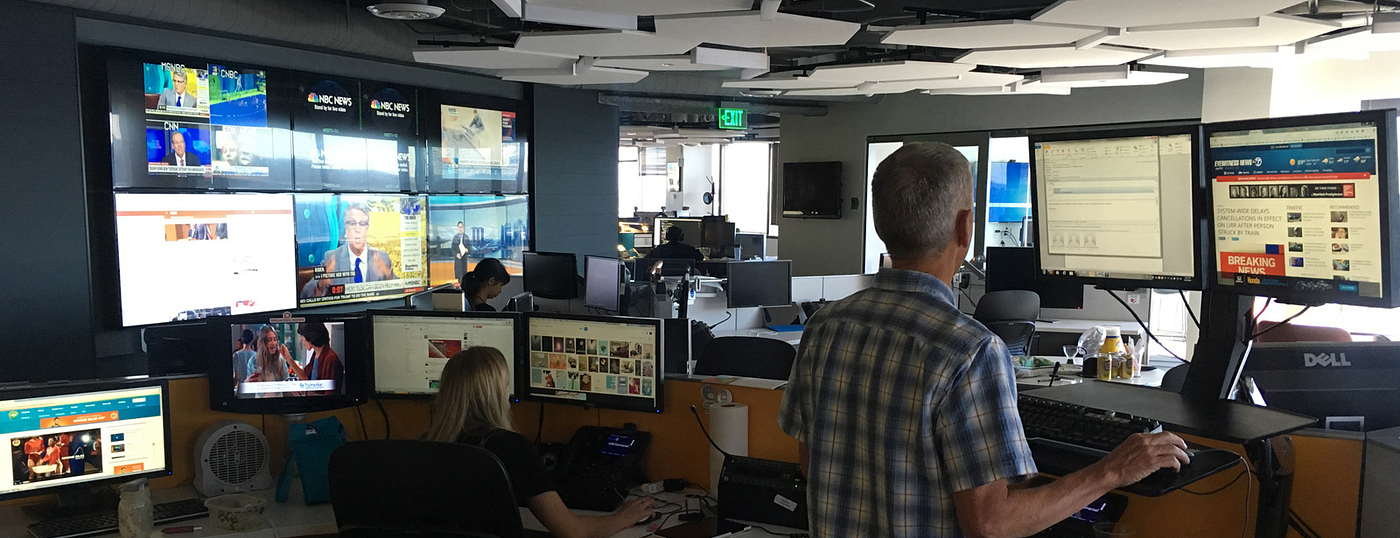
The Breaking News team at work in Seattle.
For decades newsrooms have reacted the same way to the first word of breaking news: they send crews to cover it. But what happens when there are 5, 10 or even 20 videos of a story — some of them live — that already exist on the platforms before the crews get out the door? Not as an isolated incident, but a daily — even hourly — occurrence?
Today platform video supports traditional newsgathering, but tomorrow it will be the central driver of breaking news coverage, redistributed both on the platforms and off. The real-time newsgathering model will be inverted, with many traditional resources discovering, making sense and packaging the torrent of user video from around the world.
If you think there’s a lot of user news video on Facebook, Instagram, YouTube, Snapchat and Twitter/Periscope right now, it’s about to grow much faster. There are 3 drivers fueling this second wave of platform video:
1. Platforms becoming “video first”
Snapchat (or more precisely, Snap) was the first platform to call itself a camera company. “We believe that reinventing the camera will present our greatest opportunity to improve the way people live and communicate,” said Snap Chief Strategy Officer Imran Khan in September.
Less than two months later, Facebook CEO Mark Zuckerberg announced that the company is shifting to put “video first across our apps,” making the camera the default experience to shoot and share video. While Facebook tests a new camera interface and a dedicated video tab, Instagram just rolled out live video, continuing its transformation from a photo app to a video app.
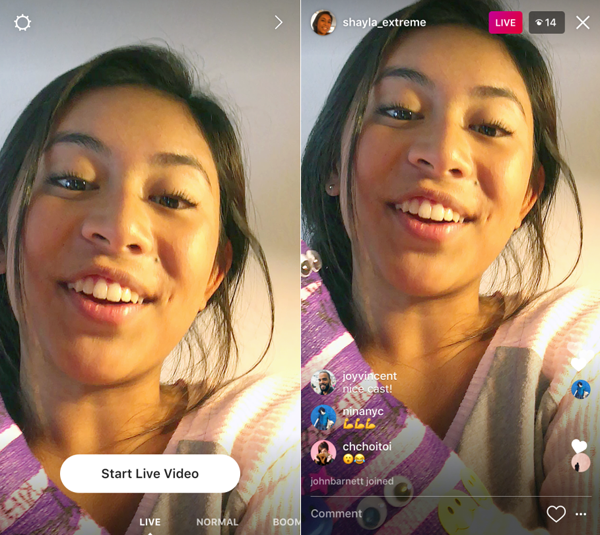
Instagram’s new live video feature takes just a swipe and a tap to get underway.
Video is the most natural and engaging way to observe and share the world around us — we don’t see in photos and text. As the largest platforms shift to a video-first experience, user behavior will follow, generating a surge in videos created, shared and consumed across the board.
2. Reducing camera friction
When most media organizations think about the platforms’ surge into video, we often think about consumption. But the platforms are also focused on video capture, which may turn out to be the most disruptive development.
Historically it hasn’t been easy to post and share a video online. Remember wiring up your webcam to YouTube? Then smartphones made it easy to record a video, but you still had to upload it somewhere.
Now “camera friction” has fallen dramatically: just open up Snapchat and tap, and you’re rolling. The default experience is the camera, and there’s no need to upload it anywhere. Snap’s new Spectacles reduce camera friction even further. Explains David Pierce in WIRED:
In the week I’ve had Spectacles, I’ve shared dramatically more on Snapchat than I ever have before. It becomes unconscious, almost: you just see something cool, and tap the button to save it to the log. Not only does having these unobtrusive glasses make it possible to get new kinds of shots, it makes it easier to capture the ones I’d want anyway.

Early reviews of Snap’s Spectacles are very positive.
Live video is another friction reducer. There’s no need to explicitly share it after you capture it. People can join the live stream in progress, and when it’s over, it automatically transforms into an on-demand clip. Soon, people won’t be “going live” per se, but just capturing video in the easiest way possible.
Beyond Facebook, Instagram and Snapchat, the other platforms are hard at work reducing camera friction. Twitter has integrated Periscope, YouTube is rolling out live functionality and chat apps are pushing into video, too.
When the platforms make it ridiculously easy for 1+ billion daily users to capture video, the landscape will change abruptly. It’s already beginning to happen, and the sheer volume and geographic density of platform video is stunning. Increasingly here at Breaking News, it’s an oddity to discover a breaking story or unexpected event that does not have video already — live or otherwise — from surprising places around the globe.
3. More connected cameras in more places
Cameras in phones, cameras in sunglasses, cameras in homes and cameras in drones. The explosion in cameras means more eyes in more places. Take just drones, for example. As drones expand from just professional use to personal use with lower prices and better battery life, a growing array of lightweight cameras will be flying among us, always rolling.
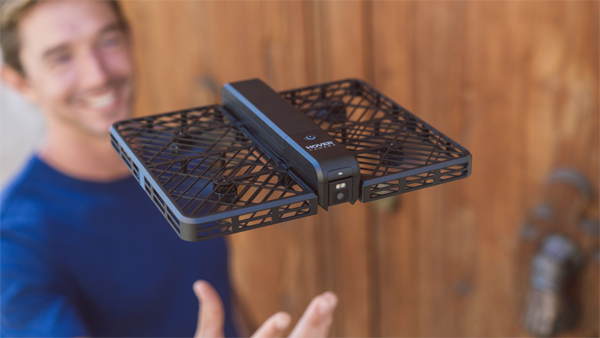
The new Hover Camera drones.
While new cameras are platform-ready, existing cameras are becoming connected. Video APIs from Facebook, YouTube and Periscope enable “dumb” cameras to pipe right into the platforms — even video switchers, too.
On top of that, connection speeds are improving both in developed urban areas and far-flung places, and Facebook is committed to accelerating the process. “Fundamentally the mobile networks are getting to the point that a large-enough audience is having a good (video) experience around the world,” Zuckerberg said in November’s earnings call.
All these factors combine to create a second, exponentially-larger wave of platform video — the videofication of everything. It’s not that users will flock to cover a story, they’ll just be there already, cameras rolling.
Newsgathering’s new reality
It won’t be a question of _if_there’s video of something that just happened, but how many. Not just for big stories, but smaller stories, too.
As we’ve seen with stories like the Dallas shooting and the Turkey attempted coup, these aren’t your average “behind the police tape” videos. They’re often in the center of the action, unpredictable and visceral. They put the viewer inside of the story as it happens.
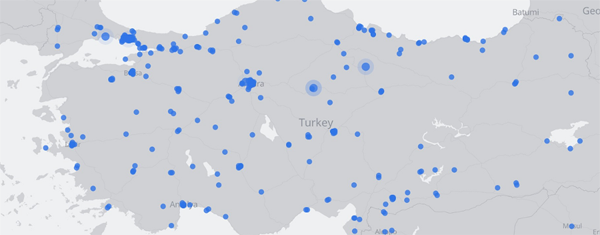
Facebook Live’s map of active streams during the Turkey attempted coup
In this world, newsgathering inverts: the immediate focus isn’t sending crews out the door, but discovering, vetting, clearing and producing user video — the best video of what’s happening — that already exists. There will be so much compelling material, it will cripple some newsrooms and create new organizations born to capitalize on it.
Today the process is somewhat sloppy but straightforward. See a good video? Try to message the originator and get permission to use it. Most of the time, it will be free. Or pay Storyful to do it for you. Or both.
As platform video becomes ubiquitous — and “core” to the success of a video-centric news organization — this process will become more complicated, competitive and costly, raising all kinds of questions:
-
How does a newsroom reorganizeto capitalize on the upcoming surge of platform video? Just keep up? How does it split its newsgathering resources between traditional and platform? What capabilities — people, technology, data and relationships — should it have internally to compete?
-
If platform video is core, how much does a newsroom outsource news detection and video discovery to a service? If competitors rely on the same service, what impact will that have on pricing, exclusivity, diversity and operating risk?
-
What’s the role of licensing? Only for the best clips? What if services secure a license for video faster than media companies can license it themselves? If everything is licensed, how much will this cost? As platform video plays a larger role, how will users react?
-
How will the platforms react? Is it all free promotion? Will they put limits on use? Build licensing into the platform? Will they create their own next-generation version of cable news by bringing together the best live events into a cohesive experience? At what point is this competitive?
-
How do newsrooms **handle the coming onslaught in live streams?**To see what’s happening? To use in their own reporting?****What constitutes fair use? How would you even license a live stream in the first place? Where do newsrooms draw the line — in real time — on what’s objectionable vs. newsworthy in a live stream? How much video should news organizations stream back onto the platforms?
These are just a few big questions facing news organizations as platform video kicks into overdrive. Traditional crews are still important for making sense of what happened, telling the story and live shots in newscasts, but the process of newsgathering for unexpected events is changing forever.
(I spent years working on TV assignment desks. Now I work atBreaking News, a NBC News company that discovers and makes sense of breaking news — including video — in early stages. I’m @corybe on Twitter.)